

Lab grown diamonds are real diamonds. That is not a marketing claim — it is a scientific fact. They share the same chemical composition, the same crystal structure, and the same physical properties as diamonds pulled from the Earth. The only meaningful difference is where they came from.
For buyers who want the brilliance and durability of a genuine high quality mined diamond without the price premium that comes with a mined stone, lab grown diamonds are worth a serious look. This page explains what they are, how they compare, and what to think about when choosing one. When you are ready to talk specifics, Matt Meis is available to help.
What Is a Lab Grown Diamond?
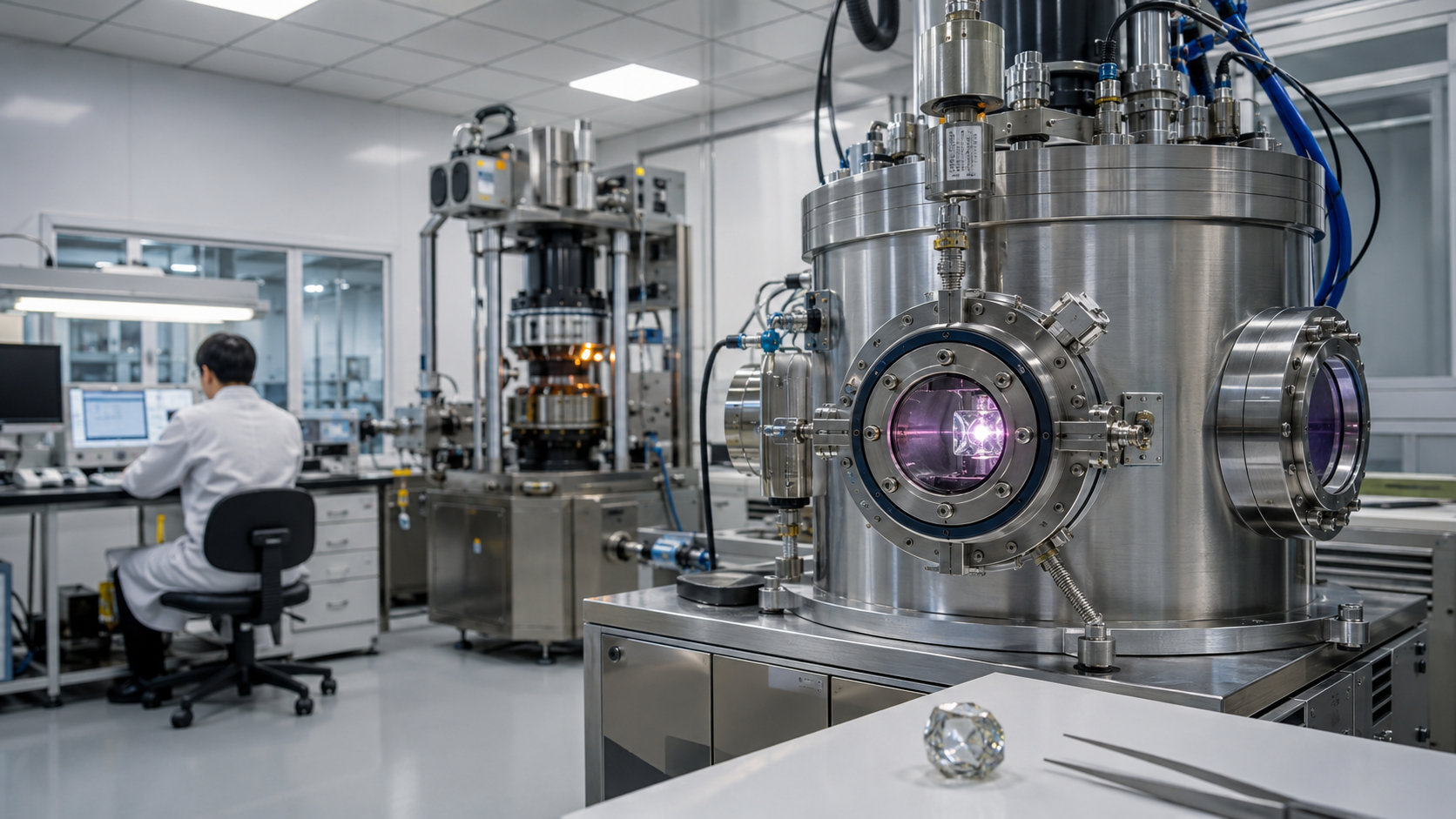
A lab grown diamond is created in a controlled factory environment using one of two processes: High Pressure High Temperature (HPHT) or Chemical Vapor Deposition (CVD). Both replicate the conditions that produce natural diamonds underground, extreme heat, extreme pressure, and a carbon source, but compress the timeline from billions of years to a matter of weeks.
The result is a stone that is, in every measurable sense, a diamond. It has the same hardness (10 on the Mohs scale), the same refractive index, and the same brilliance as a mined diamond. Many gemological laboratories grade lab grown diamonds using the same 4 Cs system they use for natural stones. Even experienced gemologists cannot distinguish a lab grown diamond from a mined one without specialized equipment and training.
What sets them apart is origin, and for many buyers, that distinction matters less than it once did.
How Lab Grown Diamonds Are Graded
Like natural diamonds, lab grown stones are evaluated on the 4 Cs: Cut, Color, Clarity, and Carat weight. The same grading principles apply.
Cut determines how light moves through the stone. A well-cut lab grown diamond will be just as brilliant as a well-cut mined diamond with the same proportions. This is the most important factor for visible brilliance, regardless of origin.
Color is graded on the same D-to-Z scale. Lab grown diamonds are typically produced in the colorless to near-colorless range (D–H), often at price points that would be out of reach in a comparable mined stone.
Clarity follows the same inclusion grading system, from Flawless through Imperfect. Because lab grown diamonds are produced under controlled factory conditions, they sometimes have different types of inclusions than mined stones, but they are graded using the same criteria.
Carat measures weight. One of the clearest advantages of lab grown diamonds is that your budget typically buys you more carat weight than it would in a comparable natural stone.
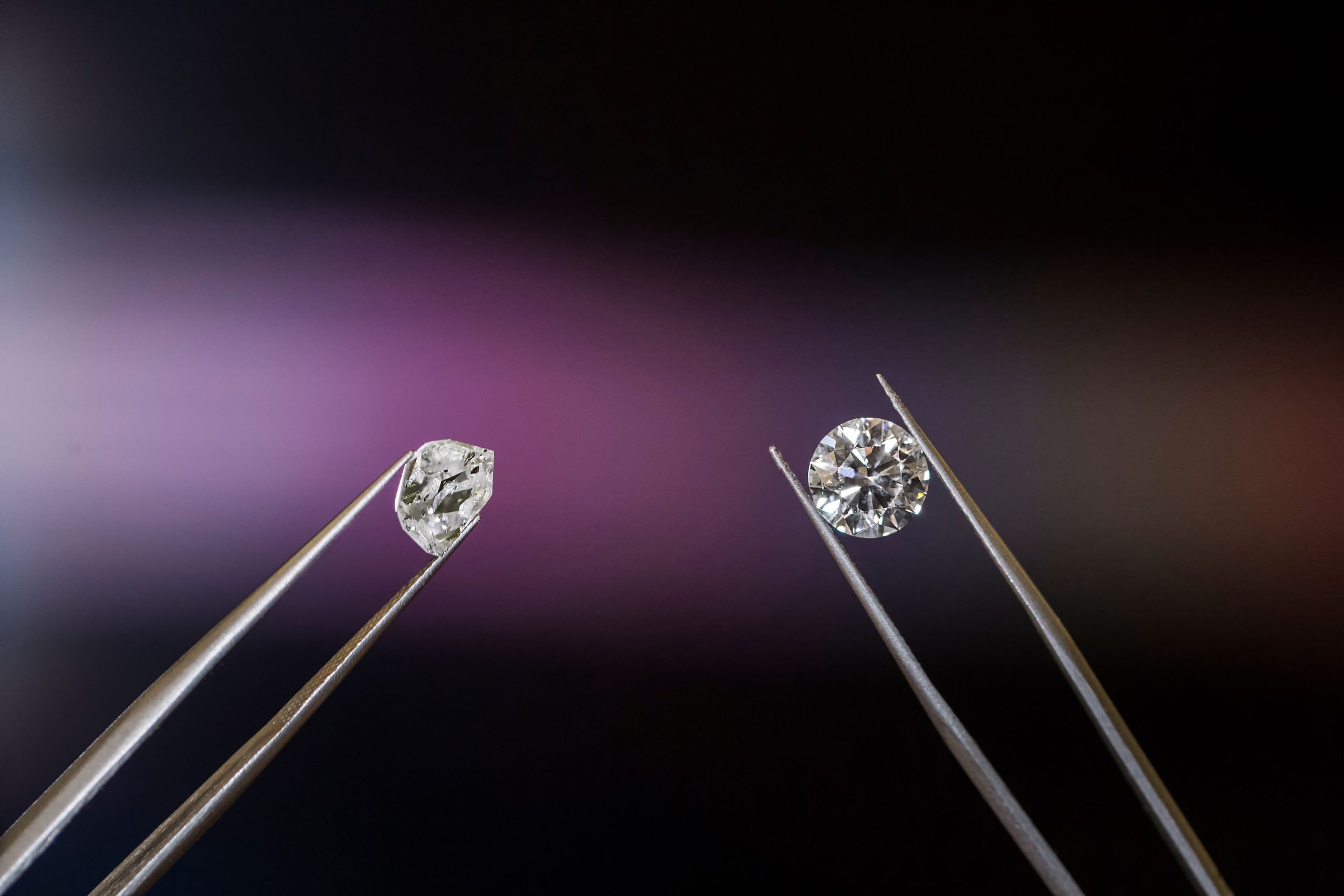
Lab Grown vs. Natural Mined Diamonds: An Honest Comparison
The right choice depends on what matters to you. Here is a straightforward look at both sides.
Where lab grown diamonds have the advantage:
Price is the most significant difference. Lab grown diamonds typically cost around 95% less than comparable mined stones. That gap means a buyer on a specific budget can access better cut quality, larger carat weight, and higher color grades than they could with a natural diamond at the same price.
Availability of high-quality colorless stones is also strong. Because the growth conditions are controlled, lab grown diamonds in the D–F color range are produced consistently and priced affordably.
For buyers concerned about the environmental and ethical footprint of traditional diamond mining, lab grown diamonds offer a traceable, controlled production origin.
Where natural diamonds hold ground:
Natural diamonds have historically maintained resale value, albeit at below retail numbers, in ways lab grown stones have not. The secondary market for lab grown diamonds is still developing, and prices have declined considerably as production has scaled. If long-term value retention matters to you, that is a factor worth weighing.
Natural diamonds carry a rarity and origin story that some buyers find meaningful. No lab process produces the geological history of a stone that formed a billion years ago.
Neither option is objectively better. They serve different priorities. If you are uncertain which direction makes sense for your situation, that is a good conversation to have with a jeweler who carries both — and is not pushing you toward one over the other.
Frequently Asked Questions About Lab Grown Diamonds
Are lab grown diamonds real diamonds?
Yes. Lab grown diamonds are chemically and physically identical to mined diamonds. They are graded by the same gemological laboratories, set in the same metals, and require no special care beyond what any diamond would. The term “synthetic” is technically accurate but often misleading — it refers to the method of production, not to the quality or authenticity of the stone.
Will a lab grown diamond pass a diamond tester?
Yes. Diamond testers measure thermal conductivity, and lab grown diamonds conduct heat the same way mined diamonds do. A standard diamond tester cannot distinguish between the two. Only specialized equipment designed specifically to detect lab grown stones can tell the difference.
Do lab grown diamonds hold their value?
Not as reliably as natural diamonds. Lab grown diamond prices have dropped significantly over the past several years as production technology has improved and supply has increased. If resale value or long-term appreciation is important to your decision, a natural diamond is the more defensible choice at this time.
What shapes are available in lab grown diamonds?
All of the same shapes available in natural diamonds — round brilliant, oval, cushion, princess, emerald, pear, marquise, and radiant, among others, are available in lab grown. Lab grown production places no constraint on the availability of any shape stone. Round brilliant remains the most popular, but fancy shapes like oval and cushion have grown considerably in demand.
Can a lab grown diamond be set in a custom design?
Absolutely. Lab grown diamonds are sourced as loose stones and can be set into any custom design. The setting process is identical to working with a natural diamond. If you have a design in mind or want to build something from scratch, the stone’s origin has no bearing on what is possible.
How do I know which size lab grown diamond fits my budget?
This is where working with an experienced jeweler, like Matt Meis, makes a difference. Because lab grown diamonds are priced significantly lower than natural stones of comparable grade, your budget will go further — but cut quality still matters more than size. A smaller stone with an excellent cut will outperform a larger stone with a good or fair cut every time. Matt is happy to walk through the options with you without any pressure to buy.
Working With Matt Meis on a Lab Grown Diamond Purchase
Matt has been in fine jewelry since 1975. When lab grown diamonds became a viable option for buyers in the mid 2010’s, he added them to his offerings because they genuinely serve a segment of clients well — particularly those who want a larger or higher-quality stone than their budget would allow in natural diamonds.
He sources lab grown diamonds through established reputable suppliers and can help you evaluate cut, color, clarity, and how a given stone will look in a finished piece. Every lab grown diamond Matt sells has independent certification to guarantee the quality. For clients in the San Diego area, this is a conversation best had in person. For clients outside Southern California, remote consultations are also available.
The goal is to help you make a purchase you are confident in — not to steer you toward the more expensive option.
Ready to Explore Lab Grown Diamonds?
If you are considering a lab grown diamond for an engagement ring, custom pendant, earrings, or any other piece, Matt can help you find the right stone at the right price and help you design something around it worth keeping for a lifetime.